We all know the feeling: that creeping sense of dread that laces into our stomachs and tightens the chest as tasks keep piling up on our desk. From useless admin to mind-numbing spreadsheets, it’s tempting to chalk it up to the capitalist hellscape we live in and tolerate the stress. But it doesn’t have to be this way. In my experience, creating crisp copy for beefound.agency, I’ve found that content marketing automation has been an unexpected salve.
Really, I don’t know where I’d be without my task management software (and saviour) Asana, or the SEO powerhouse, Semrush. But that’s not to say that these tools are a silver bullet. As I’ll explain in the ‘meat’ of this article, content automation is only as effective as its strategy.
To get the content machine well-oiled and working for your business, a ‘human in the loop’ approach is a must; that is, ensuring a certain level of human oversight to prevent automation overload and a loss of creativity, among other pitfalls. In my mind, this labour-saving technology should be geared towards allowing us marketers to be inventive and productive – not to mention spend more time with our loved ones and communities.
Keep reading to find out exactly how your small business can do the same.
Skip ahead to:
- What is content marketing automation?
- Why automate? The benefits
- Where automation works well
- When content automation backfires
- Best practices
- Recommended content marketing automation tools
- Summary
What is content marketing automation (and what it isn’t)?
Before we wade into the reasons why your business is sorely missing out if you’re not automating aspects of your content marketing, let’s walk things back a little. What sort of scope am I talking about?
When most marketers or tech bros bring up content automation, they’re often referring to the use of technology to streamline repetitive, time-consuming parts of the content marketing process, like research, scheduling or task allocation – not to be mistaken with the replacement of human input or creative thinking.
A solid automation approach is all tied up in efficiency and smart distribution, in such a way that amplifies your existing strategy and creative strengths. So, a supplement, not a shortcut.
Although a robot doing all of your work while you kick back is a funny image, full content generation is going to get you nowhere ranking-wise, following Google’s 2025 anti-spam update. But let’s put a pin in that for now.
The important thing to emphasise is that automation is best paired with overarching processes, rather than creating copy, and won’t serve you well if poorly thought through.
Why automate? Benefits of content marketing automation
To automate, or not to automate: that is the question. From a marketing agency perspective, it’s an easy one, too. Using automation tools to cut down the admin allows us to focus on the nitty-gritty strategic aspects of the craft and affords us more time to get better at what we do. But that’s not all – content marketing automation has many other benefits…
Save time, costs & resources
As explored in the beefound.agency guide to increasing small business profit, one of the key ways to drive growth is to eliminate wastage. In the context of automation, that could mean streamlining unnecessary software subscriptions into one centralised tool that does everything. Or freeing up your staff’s time on laborious research, sending emails and posting the content they create.
The correlation between the productivity and efficiency of your operations and profitability is well known – automation is like pouring on the accelerant. When you look at the stats, you’ll see what I mean: with automation, 80% of marketers see more leads, and 77% see higher conversion rates. It’s also reported to cut marketing costs by 12%, whilst boosting sales productivity by 14.5%.
Scale campaigns faster
Besides recouping hours spent on the grunt work, marketing automations enable content marketers to create scalable processes.
I’ve personally seen this play out in beefound.agency’s content workflows; we’ve devised repeatable processes for our clients, with the help of Asana for task management, ChatGPT for refining briefs and supporting research, as well as automated SEO audits that hit our email inboxes every month. That’s countless hours freed up to provide more value to our clients!
The bottom line is this: the more manual a process is and the more it depends on a single individual, the trickier it will be to scale up when your team is ready to grow. Get it right and you can scale your business online sustainably and boost those all-important sales.
Improve targeting and consistency
Humans aren’t built to synthesise millions of data points in rapid time – but algorithms are. Here, automated website tracking and analytics can save your team the labour (and the headaches).
One thing AI-powered tech is really good at doing is sifting through personalised data and cutting through the noise. With a high-level overview of the key metrics relevant to your content marketing campaigns, you can make better, faster strategic decisions and identify friction points in your approach. These insights, then, allow us to tighten our copy, improve targeting and stay consistent across our output – not to mention focus on the content types that convert best.
Iterate and improve
Returning to the point I made about a ‘human in the loop’ strategy up top, automating your processes presents a brilliant opportunity for continual improvement. Far from a ‘set up and you’re done’ situation, businesses that frequently monitor, tweak and refine their approach see the best results. It’s all about complementing what AI and automation do well, with the human stuff that it simply can’t replicate (at least for now…).
Keep with the times
According to a 2025 McKinsey study, over the next 3 years, 92% of companies plan to increase their AI investments. Since the top applications of marketing with AI are content creation (35%), data analysis (30%) and workflow automation (20%), it’s up to business leaders to get with the program, granted it’s not always easy…
Even at beefound, we’ve had to adapt to this rapid shift, rethinking the way we create content to appease our new LLM overlords (AKA generative AI engines like Gemini, ChatGPT and Llama) and, ultimately, get our clients cited by them. After all, more and more people – especially Gen Z – are turning to AI search instead of Google, which means fewer clicks through to your ranking page in the SERPS.
In a recent interview with Northern Powerhouse, our founder, Tom Harrison, explained how we trained an AI to support our marketers through the preparation of SEO-primed blogs, from article structuring and identifying content gaps to finding reputable studies to reference.
“Just that in itself,” he says, “helps us brief a copywriter, which probably saves us around 45 minutes every time we create a piece of content.”
Social good
The role of automation for social good has been on my mind ever since I read this article from Elle Hunt at The Guardian. In it, she ponders over how productivity gains could translate into a shorter work week and “shift the locus of life and meaning away from work, and even restructure society towards recreation and connection”.
While her ultimate take is decidedly more pessimistic, I see it as a real possibility – particularly as beefound.agency is already a proponent of the 4-day work week. Thanks to improved productivity and a healthier work-life balance, we’re able to give more to our communities and spend more time with the people we love. Something I’d love to see replicated across the UK.

Where automation works well
Automation works best where there are inefficiencies and gaps in your strategy. Here are a few use cases popular among today’s brightest marketing minds.
Email campaigns
Automated email workflows streamline follow-ups and nurture sequences, making your lead gen efforts way more efficient. With smart segmentation, you can tailor messaging to different audience types or stages in the funnel, turning what would be a generic blast into a timely, relevant experience – and that equals more qualified, purchase-ready leads.
It’s equally valuable for e-commerce brands too; just imagine how many sales abandoned basket reminders will recoup, or how much time you’ll save on marketing with tailored product recommendations triggered by a specific behaviour. The benefits speak for themselves!
Social scheduling & reporting
If you’re still manually posting across multiple platforms, stop. Automation tools like Buffer or Gain can queue and cross-publish your content, while analytics dashboards pull performance data into one neat report. There’s really zero reason you should be wasting time logging into each separate account!
Workflow approvals & asset management
As far as content marketing goes, this is a huge one. Thanks to automated workflows, assets, content and editorial calendars can move through a clear approval process – from draft to creation to publish – without endless email threads clogging up your inbox.
Content auditing
SEO is one of the most powerful automation playgrounds. Automated keyword audits, backlink checks and rank tracking reports help your team glean insights about your content’s performance in the SERPs and distinguish technical issues from content improvements.
At beefound.agency, we’ve even created our own AI optimisation audit GPT to ensure that we’re not missing out any opportunities for ranking, whether that’s missing schema or a lack of local relevance to the intended audience.
Psst, if you haven’t already, go read our SEO marketing tool recommendations; many of them feature automations that will seriously speed up your workflow.
Content flow: ideation, planning & outlining
Automation isn’t just for the dry stuff like analytics and scheduling; it also functions as a creative lubricant, allowing you to soundboard ideas and unclog mental blocks. We’ve already mentioned how us at beefound.agency use LLMs to support research and content structuring, so we won’t dwell on that here. Other uses include headline testing, refining CTAs or exploring alternate angles you may have missed before you take them to your team.
Connecting your content marketing with other parts of the business
Finally, it’s worth giving the role of CRMs a mention. These helpful platforms are full of automations – many already featured on this list – and, through APIs, allow you to connect your marketing activities with teams, stakeholders and departments, not to mention your existing platforms. That’s a win for efficiency!
When automation backfires: the risks of poor content automation
Time for the caveat… and the elephant in the room. The issue of AI slop and over-automation.
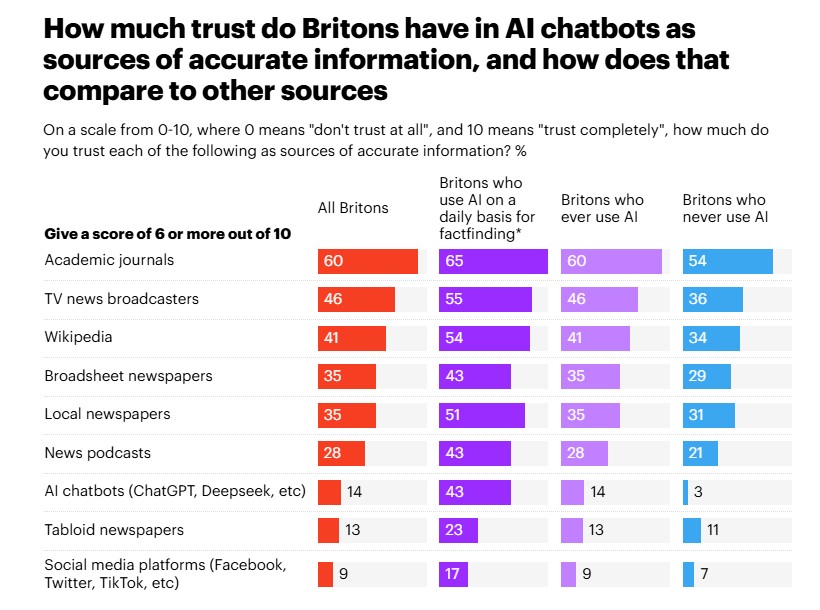
When many consumers can spot AI-generated content and, furthermore, distrust this AI content, navigating automation can be a bit of a minefield.
Here, we’re talking about autogenerating full articles with no human oversight; output that inevitably leads to spammy, irrelevant, unoriginal and often low-quality content – the sort of stuff Google is penalising following its 2025 Anti-Spam Update.
While AI-assisted content does indeed rank, if it’s thin, unfocused, lacks authority and experience, or is written primarily to game the SERPs rather than delivering genuine value, it’s not going to perform well. Similarly, replacing copywriters with ChatGPT isn’t going to help you; human creativity and empathy are irreplaceable and, in copy, powerful AF.
Truly impactful automation goes beyond a ‘set and forget’ approach. Humans need to steer the process with a fully fleshed out strategy, quality control, innovation and, in the case of AI, detailed, effective prompting.
Best practice tips from beefound.agency: content marketing automation that adds value
I’ve harped on about the benefits and ways automation can be used to streamline your content marketing, but what’s the best way to go about it? Here are a few pointers to keep in mind.
Think strategy first, tools second
A prerequisite to effective automation is a solid strategy. While those trigger-based actions make things relatively hands-off, you’re missing out on its true potential if you’re not doing it in a targeted way.
Look for bottlenecks, repetitive tasks and time-consuming manual processes. How can you improve these processes without detracting value?
Segment and personalise with intent
It’s impossible to create impactful content without first personalising it to your target audience, and that requires a detailed understanding of their search intent, pain points and needs.
If not, you’re throwing out content that simply won’t stick – with people or search algorithms. As our founder, Tom Harrison, recalls an example of why it’s a bad idea to automate blindly:
“I remember signing up with an estate agent: I filled in a form with lots of data about what I was looking for in a house. When I started receiving their weekly “New Properties” mailing list, all I got were generic emails that were personalised to “Tom” – that was it! Setting up segments by budget, locale or bedrooms and so on isn’t hard… It resulted me unsubscribing pretty quickly. You have to meet leads where they’re at, or you’ll just lose them”
Test & refine based on data
As consumer behaviour changes, so should your strategy. That means tracking key metrics like time saved, CTR, website visits and engagement rates to see what’s performing and what’s not. Don’t leave these processes unattended; use data to continuously learn, refine, iterate and improve.
Avoid full automation of ideation/writing without oversight
Not to overplay the dangers of over-automation, but it’s important that you don’t generate all of your content without the oversight of real people. Here, you run the risk of losing nuance, depth, imagination and impact – an outcome reflected in a recent study by Bynder wherein 25% of surveyed consumers reported that AI generated content felt impersonal and 20% said it made a brand less trustworthy. The moral of the story is publish content for readers, not for rankings.
Keep documentation
It’s not the most interesting part, but it’s important. Documentation will allow new members of your team to get up to speed with processes while making your automation setup more replicable. Record workflows, decision points, contingencies and approval paths. We do this with Asana, and it works a treat!
Provide training to users
Consider onboarding and training processes for your team – the learning curves might be steep, so support will alleviate the stress of adoption.
Content marketing automation tools we recommend
Finally, allow me to share a few tools that can optimise your content marketing processes like a charm. Note that this is only the tip of the iceberg. (We have a complete guide to SEO tools that you might want to check out after this).
- Asana: Ideal for managing content workflows, deadlines and approvals across teams, which helps keep strategy and execution aligned without missed steps.
- Klaviyo: A powerful email automation platform that supports detailed segmentation, personalised messaging and data-driven campaigns – great for e-commerce or service-led follow-ups.
- Semrush: Combines keyword research, content audits and competitor analysis, bringing automated insights to inform your content strategy.
- Hike SEO: Designed for small businesses without in-house SEO experience, it automates tasks like keyword tracking and optimisation suggestions.
- ChatGPT : Speeds up research, ideation and content outlining and is best used as a support tool, not a replacement for brand voice or creative thinking.
- Omnisend: A marketing automation platform built for e-commerce, it includes email, SMS and other channel automation for better timing and, thus, better conversions.
- Google Gemini: An AI-powered assistant within Google Workspace that summarises research, drafts content and automates simple marketing tasks directly within your documents or emails.
- Mailchimp: User-friendly platform with built-in templates for automating newsletters, customer journeys and basic A/B testing.
- HubSpot: A complete marketing automation suite. Brings together CRM, email, blog scheduling, SEO and social media for better campaign alignment.
- Buffer: Schedules social media posts and tracks performance, eliminating daily manual input.
Summary: automate smarter, not louder
Automation is powerful if done with care and creativity.
That means following a strategy-first approach, automating the grunt work that eats up time best spent elsewhere, and reviewing it on a regular basis so that your content remains as effective as possible and your processes as efficient.
The rest is just a mindset shift. Automation isn’t the bad guy, nor is it cheating; it’s simply another tool at your disposal – and like any other tool, without strategic direction, it’s not going to serve you. Only strategy will let you reach its max potential.
With content creation, in particular, that means using AI to tighten your structuring, take the burden out of research – and refine your brand voice, not overwrite it.
What next?
If you’re ready to explore the wonderful world of content marketing automation, you’re in for a treat – there’s a plethora of tools waiting out there to be discovered.
Not sure where to start? Then get in touch with the beefound.agency team. Our friendly hive of experts is more than happy to advise you on content strategy in the age of automation and set up your business for sustainable success. Discoverability is just around the corner!