As Elizabeth Arden once said, “Repetition makes reputation and reputation makes customers”. In the digital realm, this is an inescapable fact: the more brand mentions, backlinks and positive reviews you accrue for your business, the more likely you are to be discovered by potential buyers online and close those all-important deals (or sales). This doesn’t happen organically, and you can’t wing it either – to keep control of the narrative, you’ll need to implement a robust reputation management strategy. Which is where the ‘busy bees’ at beefound.agency come in.
In this article, we’re going to give you a whistle-stop tour of what any effective online reputation management strategy should involve and the steps you need to take to implement your own. From managing negative feedback to sculpting your brand image to perfection, here’s everything you need to know.
Contents:
- What Is Reputation Management?
- Why Brand Reputation Matters…
- …And Why Managing It Requires Strategy
- The Anatomy Of An Effective Reputation Management Strategy
- Crafting Your Own Strategy In 6 Steps
- Essential Reputation Management Tools
- Conclusion
What Is Reputation Management?
This might seem obvious, but it’s worth reiterating: reputation management is the practice of influencing how people perceive your brand, both online and offline. From something as small as how people react to your brand logo to ensuring that the content about you appearing in organic search has good things to say, there are many elements to consider. Far from just revolving around damage control, reputation management is about proactively shaping your brand’s narrative, building trust and fostering loyalty.
Why Brand Reputation Matters…
In a nutshell, because people Google everything. A great product or service is only part of the puzzle; if what comes up in the search results is unflattering, your reputation will precede you. In fact, 93% of consumers say online reviews influence their purchasing decisions.
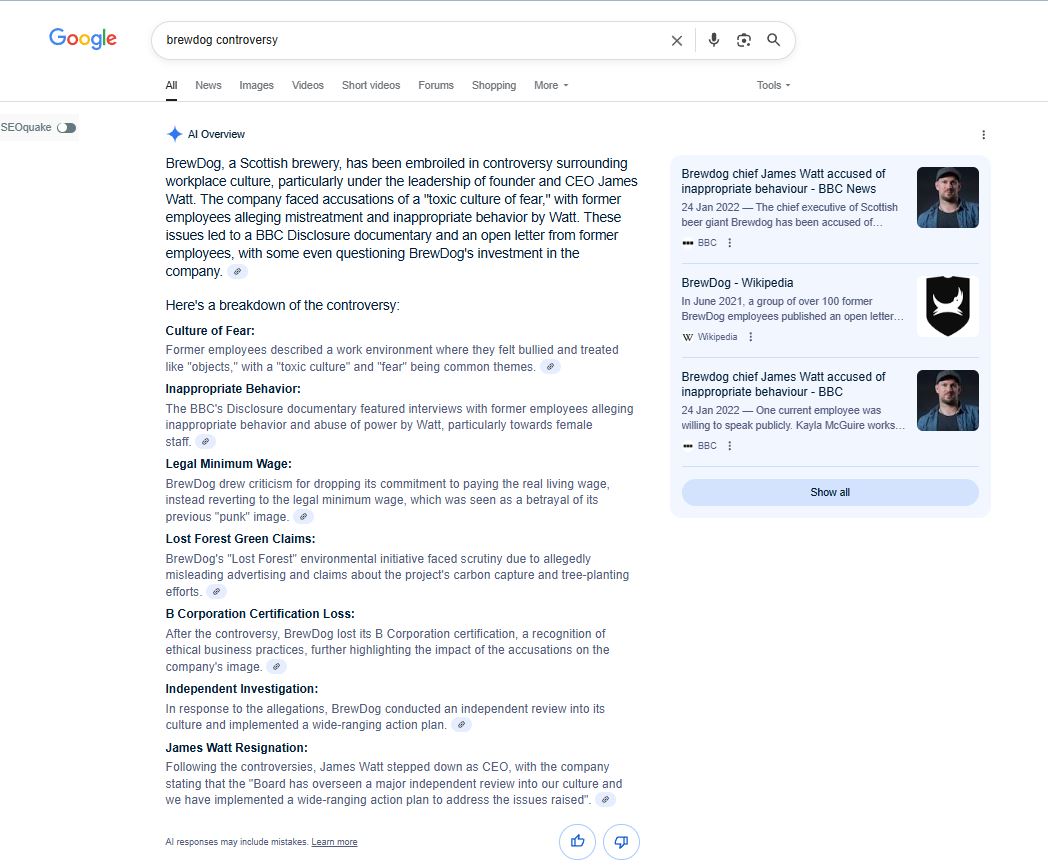
In the dog-eat-dog world of social media callout culture, it’s easy to see how one poor customer experience could snowball and cost your brand trust and, crucially, sales. Case and point, the backlash BrewDog experienced after dropping its real living wage pledge.
…And Why Managing It Requires Strategy
A few Instagram posts or glowing reviews won’t cut it. In today’s hyper-connected world, reputation management must be intentional, consistent and multi-channel. Customers rarely make decisions based on a single interaction; they follow winding paths to purchase, encountering your brand across social media, search results, review sites, paid ads and more.
Each of these touchpoints is an opportunity to form an opinion, and that opinion builds over time (remember our opening quote?). That’s why your messaging, tone and customer experience need to align across every channel. Reputation isn’t just what you say; it’s what people feel, share and remember.

The Anatomy Of An Effective Reputation Management Strategy
A successful reputation management strategy is never one-dimensional. It’s a living, breathing framework that combines several marketing disciplines, each working together to shape how your brand is perceived.
As a rule, this strategy should cover both online and offline reputation drivers, but in a digital-first world, your online presence often sets the tone. The key is consistency across every interaction, ensuring that whether someone Googles you, sees a paid ad, or reads a customer review, they encounter a cohesive and positive brand narrative. There’s also the role of search engines and how they understand your content too, but we’ll get to that later…
The main point to mull over now is that online reputation management shouldn’t be reactive. Instead, you should be strategic, actively ensuring your brand image is aligned with your business goals.
Online Reputation
Your online reputation is your digital first impression – and often, your last. It influences whether someone chooses your brand over a competitor, whether a journalist reaches out for a quote that drives traffic to your site, or whether a potential client sees you as credible.
Because it takes a user interacting with an average of 8 touchpoints to turn them from a lead into a customer, you really ought to maintain a strong, positive presence across each and every channel you use.
With that preamble over, here are the key components that shape the online side of your brand reputation.
Digital PR
Digital PR is all about visibility and authority. It’s the art of getting your brand featured in online publications, blogs and news outlets, often through press releases, thought leadership or expert commentary. As tuned-in readers might’ve already guessed, there’s some overlap between this discipline and SEO outreach – the strategy is similar, but the aims are different. In both cases, though, the benefits are twofold: you build credibility with audiences and earn high-quality backlinks that boost your online discoverability. The idea is to cultivate a consistent presence in reputable media outlets, which then positions your brand as a leader, not a follower.
Organic Search
When someone Googles your business (and usually they will), what shows up matters. A strong organic search presence ensures that the right content appears at the top; we’re talking your website, positive articles, helpful blog posts and favourable reviews. You can achieve this through search engine optimisation best practices, such as:
- Creating high-quality, intent-driven content,
- Ensuring that product/service pages and business profiles are well-optimised,
- Doing the work to incorporate keywords into your content;
- And maintaining a technically sound site.
In an AI-obsessed world, you also need to be thinking about the role of AI overviews. Since 80% of consumers now rely on these ‘zero click’ results in at least 40% of their searches, your reputation management strategy has to shape up to this new reality. Fortunately, as AI pulls from organic results, you have some control. Much of this lies in the SEO potential of reviews, brand mentions and your content marketing, making them integral aspects of an effective approach.
Jargon buster: SEO, or search engine optimisation, is the practice of making your website more visible to search engines and people. By using SEO techniques, you can improve where your website appears in the search results and attract more traffic and, in turn, customers. For a deep dive, make sure you go and read our dedicated guide to SEO-powered reputation management.
Paid Search
Paid search, or in other words, online ads, gives you further control over what people see when they search for your brand or related terms. Its many benefits include how it can be used strategically to promote positive content, guide users to high-converting landing pages, or push down less favourable results. As you can imagine, it’s particularly useful in damage control situations or when launching new initiatives that need visibility fast.
Reviews
Reviews are the digital equivalent of word of mouth. They shape trust, influence search rankings and often appear right in your Google listing as Seller Ratings. Whether it’s Google Reviews, Trustpilot or Reviews.io, encouraging happy customers to leave feedback and responding to all reviews with professionalism (even the negative ones) is critical. This is all to say that a structured approach to review generation can steadily build your credibility over time and soften the impact of any occasional negative feedback. Social proof = buyer confidence.
Community Management
Your social media channels are often the frontline of your brand’s online reputation. From replying to comments and DMs to addressing concerns publicly, community management plays a pivotal role in shaping how people perceive your responsiveness and brand personality. When 79% of consumers expect a response to social media enquiries in 24 hours, not only do you need to be thoughtful, clear and intentional in your messaging, but you need to be proactive too.
Remember, customers are more likely to align themselves with a company that not only sells good products, but also communicates humanly, openly admits to mistakes when things go wrong and takes action to remedy such problems.

Offline Reputation
Whilst online reputation management strategy makes up the bulk of this guide, how you address your in-person reputation matters too. After all, physical interactions and first impressions bleed into the digital world when customers and stakeholders take their voices online. In order to protect your reputation in business reviews, on social media and employee experience sites like Glassdoor, your business ought to live out its brand values in everything it does.
Print Advertising
From billboard ads to train station posters and spots in local magazines, there are numerous ways to infiltrate the minds of your audience. Besides having more staying power in terms of memorability, an important fact to remember is that the majority of consumers trust them when making a purchase decision.
Stakeholder Engagement
As well as your customers, it’s important to keep your various stakeholders on side. This means maintaining clear communication, regularly checking in with them and being proactive with your planning so that your relationships become deep-rooted rather than staying stagnant and surface level. Of course, the specifics will vary wildly depending on your industry and business model, but it’s worth checking out the government’s resources if you’re interested in jumping down this particular rabbit hole.
Events
There’s nothing like a genuine human connection and face-to-face conversation when it comes to executing your reputation management strategy. After all, in-person interactions often leave a stronger, longer-lasting impression than digital alternatives. So don’t skimp on traditional outreach efforts, from a presence at relevant conferences and speaker events to stalls at local markets.
Customer Experience
Straddling both the offline and online, and indeed underpinning every aspect of your reputation management strategy, is customer experience. From the usability of your website to how they interact with agents on the phone or via live chat, each touchpoint should offer a smooth, consistent experience that reflects your brand values and messaging.
Employee Experience
As we mentioned in the BrewDog example earlier, the way you treat employees internally can easily become common knowledge – but it’s not just about keeping up appearances; a positive working environment has countless benefits, from a happy, healthy and engaged community to improved productivity and, in turn, financial reward.
To keep your company in the green, consider implementing a robust HR strategy, establishing employee networks, provide attractive benefits and take steps to engage with the wider community. For example, here at beefound.agency we’re giving back by supporting local initiatives like Oscar’s Paediatric Brain Tumour Charity and enacting the values of the Good Business Charter.

Crafting Your Own Strategy In 6 Steps
1. Audit Your Existing Reputation
Start by taking stock of where you currently stand. Google your brand name, read reviews and look through your social media mentions (check hashtags, sift through your comments, DMs and @s). You’ll quickly spot what’s working and where the red flags are. This will give you a clear baseline to measure future progress against and help you understand how your business is perceived today. For a more comprehensive look, you can invest in software, but put a pin in that for now.
2. Identify Your Strengths, Weaknesses & Focus
With the audit in hand, pinpoint the areas where your brand shines and where there’s room to grow. It might be your glowing reviews but lack of media coverage, or solid content but low engagement. Decide what matters most to your business and focus your strategy around those priorities.
3. Develop a Tone Guide & Bottom Lines
To ensure consistency across all channels, create a clear guide for how your brand communicates. This should cover language style, core messaging, and any lines you won’t cross – whether that’s never ignoring complaints or always owning up when mistakes happen. It helps everyone stay on the same page and ensures your values come through in everything you say. Templates for frequently asked questions or a page to signpost customers to can also be of great help.
4. Delegate the Responsibility
While it’s useful to have a point person or team leading your reputation efforts, protecting your brand image is everyone’s responsibility. Every employee plays a part, whether they’re customer-facing, creating content or working behind the scenes. That’s why it’s important to clearly communicate the strategy across your business.
Take the time to explain why reputation matters, how the plan works and where each department fits in. This could mean hosting internal sessions, writing up a mini playbook or just offering regular reminders in team meetings. Make it real by showing how small actions, like how someone responds to an email or what they post on LinkedIn, can shape public perception.
5. Be Proactive
Don’t wait for problems to pop up. Get ahead of the game by creating positive, search-optimised content that ranks, building media relationships, encouraging and replying to reviews and showcasing your values publicly. Reputation is built day by day, so every piece of content or customer interaction is a chance to reinforce trust.
6. Track Your Results, Rinse & Repeat
Set up tools to monitor brand mentions, review trends and page rankings so you can measure the impact of your efforts. Keep refining your approach based on what’s working and what’s not. A strong reputation management strategy is never truly ‘done’ – it’s an ongoing process of listening, adapting and improving.
Essential Reputation Management Tools
Now, you might be thinking, how on earth do I keep track of so many channels? Good question! Well, the answer lies in automation. With a handful of reputation management tools at your disposal, you’ll automatically be notified of negative attention, so you can nip it in the bud before it gets out of hand.
- Google Alerts – Set up alerts for free, including your brand name, employees and competitors; identify PR storms before they break; and keep on top of industry trends.
- Google Business Profile – Claim and optimise your Google Business Profile and actively reply to reviews you accumulate.
- KWDFinder – Find out what queries your potential customers are using, spy on the competition and analyse your backlink profile.
- SEMrush – Conduct a website audit, analyse traffic and backlinks, get help with keyword research and content creation and more.
- Brightlocal – A specialised tool for review management, helping businesses get complete oversight of their reputation from UGC.
- Hootsuite – A fully comprehensive reputation management tool that scours the web and social media for brand mentions and the sentiment behind them, including logo use!
- Mention – Another more advanced tracking system, Mention gathers data from online conversations about your brand on the web and social media, displaying it in one central dashboard.
The Bottom Line On Reputation Management Strategy
A reputation isn’t built overnight, and it certainly can’t be left to chance. By being proactive, consistent and customer-focused, you can ‘bee’ the brand people trust and talk about. It’s merely a matter of getting organised, investing in the right tools and ensuring each of your employees has a robust action plan to follow to create cohesion.
Whether you’re in the early stages of nurturing your business online or have a strong local legacy to uphold, your brand’s reputation is an essential part of the business growth playbook. So, if you’re ready to give it a go but don’t quite have the resources to do so, why not leave it to our ‘hive’ of search engine specialists? With experience across numerous industries, we’ll help you polish your online reputation.
Over To You
Here comes the end of the tunnel. We hope this deep dive into reputation management strategy has proven helpful, enlightening, or entertaining at the very least. Your next steps are to take the action points we provided above and tailor them to your unique situation. Remember, clear communication and consistency go a long way.
Now, how are you going to protect your brand’s reputation?