It’s rough out there. We said it. Being a retailer, whether in-person or online, is tough. Local businesses are feeling the pressure as mega-corporations like Amazon shake up the market, and with drop-shipping platforms like Temu driving down prices, it’s hard to compete. But there’s hope – multichannel retailing is a strategy that can help businesses rise above the noise.
This raises a series of questions. What exactly constitutes multichannel retail? Why is it such a hot topic right now? And, perhaps, most importantly: is it worth it for small businesses?
All good points. So good, in fact, that we’re going to interrogate each of them before we probe into how to implement this diversification tactic into your wider marketing plans.
Skip to:
- Defining multichannel retail
- Understanding the benefits
- Challenges & how to overcome them
- Implementing a robust strategy
Defining multichannel retail: what exactly is it?
Let’s begin with an explainer. After all, who doesn’t love a good definition?
Multichannel retail is an easy concept to grasp. It’s simply a business strategy that involves selling products and services via numerous sales/retail channels. The purpose of this sales model is to meet customers where they’re at; it’s all about reaching them at different touch points along an increasingly complex customer journey, finding creative ways of marketing to them.
The sales channels in question are basically the places, or methods, by which businesses sell stuff. Typically, you can break them down into offline and online channels, but they do tend to interact. For instance, a social media post might indirectly increase footfall in a physical shop, or a QR code on an in-store poster might lead to a website visit, where the customer makes a further purchase. As you can see, the customer journey can move between physical and digital and vice versa.
View this post on Instagram
Multichannel retail in practice
A good example is The Yorkshire Soap Company. While they have brick-and-mortar stores across North Yorkshire, they also have a presence on social media, a mailing list and a website from which you can order their goods. On top of this, they’ve gone the extra mile by integrating their sleek retail experience into Instagram by tapping into the 1.4 billion people actively using its shop feature. By tagging products, you effectively skip out steps in the buyer’s journey, incentivising sales and increasing your ROI.
A brief history
Multichannel commerce is everywhere you look, at least when it comes to the big brands. Everyone is jostling to take up valuable space in different retail channels, which has caused a chain reaction across industries, rippling down to even the smallest of companies. This is challenging the traditional single-channel sales model, stealing its power and truly consigning it to the past. But how did we get here?
The simplest time was when most touchpoints were digital, and customer interactions were easier to track. Back in the day, however, there were limited ways to get customers down to the shop: print posters, word-of-mouth, mail, newspaper ads and later radio and TV… Then the internet changed everything.
Right now, things are very different. Customers can find and purchase products by browsing search engines, scrolling on social media and exploring thousands of apps on top of the old-school methods. In 2024, it’s difficult to imagine that there was a time during which there was only one type of retail channel to exploit. What would we do without online shopping?
Anticipating “the next big thing”
When the internet truly took off, ecommerce came to the fore. And, although not all businesses were able to contend with this digitally charged turbulence, those that did adapt swiftly were able to survive and thrive thanks to their innovation. The same can be said about the rise of social media and when the rug was collectively pulled from under our feet during the 2020 pandemic.
As customer behaviour has undergone transformation after transformation multichannel retailing has become a key tactic in the sector. Ambitious leaders who keep an eye on trends have been quick to adapt. At its core, multichannel retail is all tied up in empowering consumers – offering new choices aligned with their values and allowing them to shop smarter. This means anticipating “the next big thing” and tailoring it to your audience.
As the lines continue to blur between in-person shopping and ecommerce, it only makes sense for businesses to adopt multichannel strategies to supercharge their customer engagement. Instead of leaving your company vulnerable to stagnation and unprecedented market shifts like those we’ve listed above, you can become agile and more resilient – qualities necessary for a successful enterprise.
Multichannel vs omnichannel retail
As similar as these two terms may sound, there’s a critical difference between multichannel and omnichannel retail. To paraphrase one of the biggest SEO entrepreneurs out there, Neil Patel, a multichannel strategy involves having multiple independent sales channels in silos, each standing alone.
Omnichannel, on the other hand, integrates all of your sales channels – creating a seamless experience across each retail platform from your website, presence on comparison shopping engines like Google Shopping to social media and beyond. Think of it like covering all bases, hitting each touchpoint along your customer journey map, whereas multichannel might miss out on a few pitstops along the way.
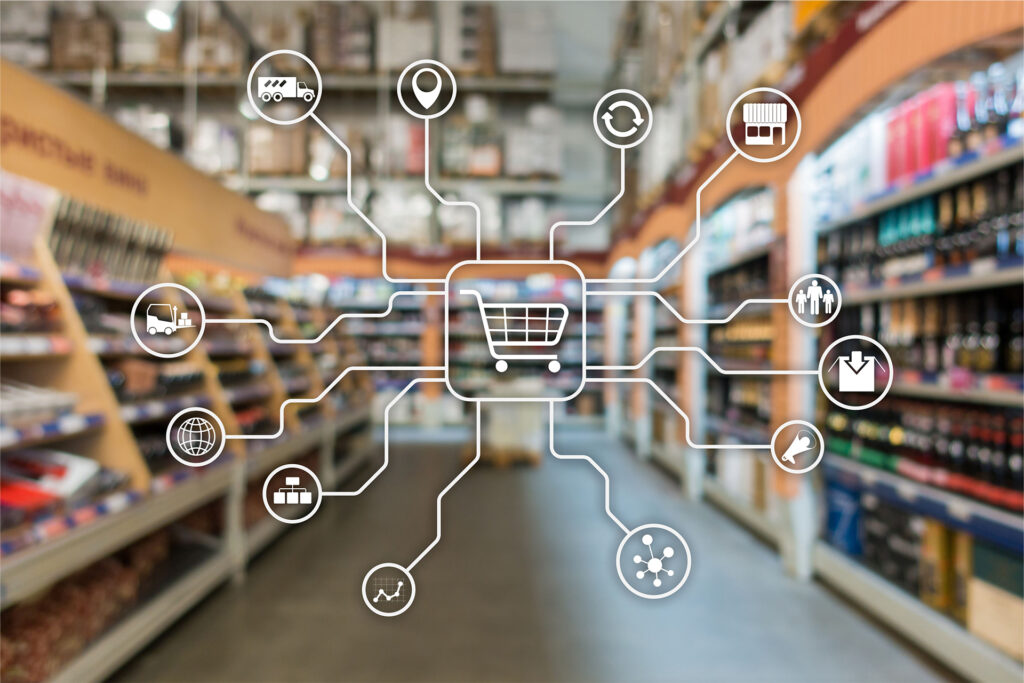
Types of sales channels
Now you’re all clued up on multichannel commerce and how it works, it’s a good time to dissect some of the channels favoured by successful businesses.
FYI: in the context of sales and marketing, channels simply refer to anywhere a customer or prospective customer comes into contact with your products. Marketing channels are mediums through which you convince them to take steps towards buying, and then sales channels are the places where purchases can be made.
Bricks-and-mortar premises
Starting things off strong, we have brick-and-mortar premises. Although online channels are, of course, the future, we can’t forget the importance and reliability of in-person shopping. After all, it’s an experience you can never 100% replicate.
This said, if you select the right online selling platforms to complement your physical shop, you can integrate them so customers on the shop floor conducting a bit of research on their phones before they purchase (56% of in-store shoppers do this!) have a seamless experience. If they have any questions and their go-to is Google, you’re at an advantage. Another option is providing QR codes on the shelves.
This way, you can achieve the full potential of your goods whilst giving your customers more information and more options, which translates into an empowered, happy buyer.
Ecommerce sites
In the internet age, your website shouldn’t be an afterthought and, in the realm of retail, it’s even more true. A bespoke ecommerce website is the perfect springboard for a cohesive content marketing campaign, offers a convenient, personalised shopping experience and will appear for relevant queries if you optimise its pages.
Pick the right CMS for your organic search goals and you can get an edge over local competitors. The best of the bunch will have integrated analytics and tracking, so you can monitor how users are finding your site and retarget them at other touchpoints along the customer journey via your other sales channels.
Choose a website design that is mobile-friendly, intuitive to navigate and matches your brand identity. Ideally, users should be able to understand the gist of your business at a glance and recognise you, if they’ve been to your physical premises.
Third-party marketplaces
Of all the retail channels to add to your ecommerce ecosystem, third-party marketplaces like eBay, Etsy and Amazon can be particularly valuable. While it might initially seem counterproductive, bringing additional marketplaces into your marketing mix can help you extract more revenue from your products. Plus, with their sophisticated distribution systems and vast user base, you can take some of the hassle out of marketing and inventory management.
The downside, though, is that smaller retailers may struggle to balance their books when accounting for the commission paid on sales.
Social media
Social media is the new kid on the block and it’s totally transforming how we think about shopping. With TikTok Shop stealing the attention of Gen Z and Meta’s online shopfronts taking social media users by storm, passing up this opportunity to reach the younger generations means losing out on sales.
The major motivator behind using these platforms is obvious – it’s where we’re spending most of our time. Prospective customers see products in a familiar context and, thanks to User Generated Content (UGC), they can see real people using them. Not only does this build trust, but the immediacy and ease with which you can purchase products on social media means that sales can roll in from a high-performing post.
On TikTok, for instance, you can sell products really directly; through in-feed videos, LIVEs and in the Showcase tab. The Showcase feature allows customers to browse straight from a creator’s account by displaying a shopping bag icon on their profile page.
Pop-up shops
People tend to forget about temporary retail sales channels when thinking about multichannel commerce, but they can be extremely effective when executed well, especially for more niche products. Whether it’s a flashy pop-up shop, a booth at a food festival or stall at a local market, combining your online presence with this modest platform, can increase your brand awareness and allow for meaningful conversations that keep customers coming back.
And if you’re really clever you can, build hype around this sales channel. See how Lucy and Yak, teased their latest pop-up shop in Yorkshire?
Search engines
Building for the modern customer journey involves being discovered in more places, and that’s exactly what search engine marketing is designed to do. By optimising your website for organic search, you can ensure that you appear in local search results, popping up for people in the Google Map pack, which encourages them to visit your nearby store.
If that wasn’t enough, you can also effectively jump the queue. And what I mean by that is in utilising paid search and investing in PPC bid management, you can get your products to appear in ads right above Google’s search results.
Here’s a practical example of how search engine marketing could fit into your multichannel strategy:
Imagine you’re a fashion brand and a consumer has just seen your jewellery ads while surfing the web, rather than in your display cabinets in-store. They were already thinking about buying a piece as a gift, so they click on the ad and navigate to your website to discern all of the basic details – price, colour, size options – before getting back to their scrolling time.
If your brand is using a multichannel approach and is tracking cookies etc., the next time they visit your website, the same lovely ring will appear as a suggested purchase. And if you’ve finessed your social media, they might see it in their suggested posts with the products tagged.
Email marketing should also figure into your retail strategy. This might include a mailing list for which you can incentivise sign-ups by offering special discount codes or links to exclusive product pages – just don’t forget to make these unique and trackable, so when you’re pooling over the data later on, you’ll be able to attribute these sales to your emails.
Remember our jeweller analogy? Now, imagine the same customer went back to the site after a bit of consideration and has added the ring to their cart. If they don’t get around to making the purchase during that session you can use integrations on your site to send them a reminder email with a cheeky discount code attached.
Apps
The UK app market earned £3.28 billion in revenue in 2023, showing that this channel is particularly lucrative. By creating a dedicated app, you can engage users for longer and offer unique functionality, such as granular product filters along with unique deals. Although not all independent businesses will have the budget to develop and maintain their own apps, the data doesn’t lie – with push notifications and the ease of use, apps are proven to improve conversion rates.
Experimental channels
While the channels we’ve discussed so far represent some of the key methods for marketing and sales, they certainly aren’t the only ones. In fact, there’s no need to rely solely on traditional approaches.
To give you an example, over the years, we’ve seen various companies try their hand at VR technology, whether that was through Build-A-Bear’s MMO game (now sadly lost to time) or fashion brands like Nike exploring the potential of the “Metaverse”.
While these ventures into new technologies aren’t always successful nor suitable for every retailer, it’s important to keep an eye on emerging trends that could transform the customer experience in the future.

How small businesses can benefit from multichannel retailing
Multichannel retailing can afford all types of businesses a strategic advantage over their competitors who haven’t yet invested in additional channels. While each ultimately boils down to increasing your profit and allowing your small business to grow strategically, here are some of these advantages in more detail.
More channels = more ways to buy
Logical as it is, it’s worth reiterating that by providing more channels you make your brand more accessible. Not everyone will be able to buy from your brick-and-mortar location (25% of online shoppers) and some people prefer a less hands-on, digital approach. By introducing more ways to buy, you satisfy more customers and this has a direct correlation with your ROI.
Multi/omnichannel retailing encourages higher spending
According to data collected by Deloitte, up to 63% of shoppers used a variety of channels when making an order of over £100. This goes to show that empowering your customers can encourage additional sales of both higher value and higher frequency.
Enhanced customer experience
A presence on multiple platforms gives businesses a broader range of audience demographics, meaning they can give market segmentation a go. This strategy can help you understand how to allocate your resources and tailor your approach to each slice of your audience. With such granular targeting and more touchpoints, the shopping experience is more convenient for buyers and addresses their individual needs.
Bolster online presence
By occupying more space online and in the real world businesses can accrue a bigger relative share of web searches. This has a wonderful compounding effect on your SEO: improved brand awareness means that more people will be searching for your brand, which makes your site easier to find. Then using the data you have collected you can optimise your content according to their most common queries and capture more people researching products you sell.
Encourages repeat business
Return customer marketing is easy when you have multiple channels to exploit. Once an individual has made a purchase you can keep in touch with them via email, social media and other platforms, rewarding customers’ brand loyalty with genuine, valuable content, useful insights and support if necessary.
Become more resilient
Keeping your eggs in one basket can sometimes be risky. By diversifying your sales channels, you can weather the storm if any of them experience a downturn, knowing that the risk is spread across numerous platforms. So, while it’s more to manage, you’ll have that all-important peace of mind.
The challenges that multichannel retailers face (and how to overcome them)
We’ve talked about the positives, but are there any downsides? Unfortunately, yes. But with the right preparation you should be able to mitigate the worst of them.
A financial investment is required
As with any business decision, it all comes back to money. The cost of SEO, paid search, websites and commissions from third-party marketplaces can quickly add up, so make sure you properly sit down to do your calculations and determine a realistic budget.
Sales attribution is more complicated
One of the unexpected challenges of multichannel retailing is sales attribution. When a company sells on multiple platforms, it can be difficult to determine not just where the sale was made, but which platform actually convinced the customer to make the purchase.
Adding to the complexity, consider that a Google Ad might introduce a product to a new customer, but a follow-up email campaign with a discount voucher could be the deciding factor in converting them into a sale. In this case, is the ad responsible for the second sale, even though it was the email that closed the deal? It’s a tough question – after all, you couldn’t have emailed the customer without first acquiring them through the ad. The lines between touchpoints often blur, and there’s no one-size-fits-all answer for this.
Another thing to keep in mind is the dwindling efficacy of 3rd party cookies. It’s trickier than ever to untangle user behaviour across platforms. As we’ve found when managing client sites, it’s better to drop cookies prone to deletion and blocking, in favour of server-side attribution software like Matomo, which offers a more holistic view of the customer journey.
It takes more time and effort
From tracking inventory across platforms to establishing a streamlined marketing plan tailored to each channel, it would be remiss of me not to mention that a successful multichannel commerce strategy takes a good deal of time and effort – luxuries that not all business owners have.
But just because you lack the time or resources doesn’t mean you should miss out on the numerous benefits of multichannel retail. Remember that you can outsource your digital marketing needs to local experts for affordable, tailor-made solutions. At WebHummel, we provide a range of digital marketing services developed to meet our clients’ goals and budgets.
Implementing a robust strategy: 4 powerful tips
Before I wrap things up, I wanted to leave you with some action points, so here are 4 tips to help you hit the ground running.
1) Angle for a seamless customer experience
A holistic view of your strategy will help you refine customer experience and maintain consistency across your platforms of choice. This means keeping a customer-centric hat on at all times. Ideally, you want to be present across a breadth of channels to reach the optimal levels of exposure across all stages of your sales funnel.
2) Leverage technology and trends
Technology and trendsetting are your friends. Whether that translated into truly leaning into digital communication and search engine optimisation or simply moving to younger platforms like Threads, there will always be plenty of new ground to cover. And if you want to go to the next level, it’s worth interrogating what you can do with AI, automation and data analytics.
3) Personalisation is key
Personalisation is now a baseline expectation. Consumers want to feel listened to, cared for and valued. From exploiting things like purchase history, browsing behaviour, demographic information and doing more to tailor your digital marketing to locals, there’s plenty you can do to accommodate each customer’s preferences.
4) Encourage and utilise feedback from consumers
Whether you attain feedback via Google Reviews or a friendly email from a happy customer, here actively listening will do you wonders. Note what they want and expect, their values and their preferred channels and really focusing on meeting them where they are.
Release the potential of the connected customer
And so concludes this whistle-stop tour of multichannel retail. We hope it has been insightful and that perhaps with a small nudge from us, you can realise the potential of a connected customer base.
Multichannel retailing isn’t just a trend; it’s the future of commerce. By adopting new retail marketing strategies, you can ensure your business stays competitive, resilient and primed for growth.
Interested in kickstarting that journey? We’ll help you add new sales avenues into your pipeline, introducing you to cost-effective marketing channels like SEO and paid search, so customers can find them. Sounds good? Get in touch with our digital marketing buffs today.