Imagine scrolling through a familiar long‑form recipe blog – maybe a 2,000‑word deep dive into the perfect sourdough loaf or a hearty lasagna. You know why it shows up on Google: its titles are stuffed with keywords, the content is grabby, there are internal links (“try this tomato sauce next!”), and that coveted image featured snippet. Many readers don’t realise this isn’t just good cooking; it’s SEO in action.
That’s exactly why SEO matters for business. In fact, according to a recent analysis, over 53% of all website traffic comes through organic search, making it the single largest driver of web visits.
Put simply, SEO is what helps content rank, reach the right people, and fuel business growth. And we’re here to reveal the secret sauce that will help you achieve that.
Skip to:
- What is SEO?
- Why is SEO important for business?
- Does SEO work?
- What affects SEO?
- How Long Does SEO Take?
- Conclusion
What is SEO?
Search engine optimisation (Or “SEO” for short) has been around since search engines started becoming the “go-to” for information in the late 1990’s – it’s why SEO is important for business.
SEO is the practice of improving websites and web pages to help them rank higher in SERPs (Search engine results pages). It is often misunderstood due to dodgy SEO companies trying to manipulate results with tricks, cheats & hacks. Thankfully, the likes of Google are constantly improving their algorithms to deliver the best result for the user. As a result of this, websites must be optimised to ensure they are found by search engines and deliver exactly what the user is searching for.
Why is SEO Important for business?
SEO is incredibly important for businesses of all sizes as it’s the number one place we look for information. With the rise of mobile search, voice assistants and a general need for convenience, SEO has taken centre stage. In 2022, a digital presence is not just a luxury but a necessity – and this goes beyond a social media page alone.
The reason SEO works so well for business is that it’s tailored exactly to what our customers want. SEO is what we would call ‘inbound marketing’ rather than ‘outbound’. This means that, rather than putting a message in front of our customers’ eyes without prompting – such as a TV ad – we’re responding to their enquiries.
So, for example, if we know our user is searching for ‘florists in London’, then we can optimise our website to show up for these terms.
SEO closes sales
According to WebFX, SEO offers a 14.6% close rate. While this may sound low, it’s actually eight times higher than other marketing methods – and this comes down to its refined tactics.
Reach customers throughout their customer journey
Not all keywords are born equal; users search differently at different stages of their journey. In fact, we can broadly categorise them based on what the customer needs, and what stage they are at in their buying journey:
- Informational – the customer may be asking a question, for example, ‘why do my feet hurt while running’?
- Transactional – their results may have returned an article recommending they buy padded running shoes, so they would search, ‘padded running shoes’
- Navigational – their transactional search may have returned a comparison article recommending a branded shoe, so they might search, ‘Nike padded running shoes’.
As you can see, each of these searches mimics the user journey – from the information gathering stage right through to finding the product they need and specifying the type. You can increase your conversion rates by having your site/brand appear in front of a customer throughout their buying journey so it’s wise create content for each stage.
How We Can Tailor Content for Each Stage of the User Journey
To make sure we’re closing the sale, we can implement on-site SEO tactics to capture the user at every stage of the journey. So, for example, we might want to know what questions our users are asking.
For informational searches
We would use tools like Google Keyword Planner, Google Trends, Answer the Public or Also Asked. We could then use this to create:
- FAQs
- Evergreen (will not go out of date) blog posts.
Transactional searches
For users at the transactional stage – that is, they know the type of product they want – we could create a listicle looking at different products or optimise product category pages on our website. These could then link through to our existing products.
Navigational
Finally, for those who know the exact brand of the product they want, this is where product descriptions come into their own. We can also make use of mark-up such as schema tagging to let Google know we’re listing products. You can also make use of Google Merchant Centre to upload product feeds and inventory to display your products for free!
You Need to be Near the Top
Every one of these tactics increases our chances of getting to those vital top positions on Google. These are essential for beating the competition as, according to Backlinko:
- The first position takes 31.7% of all clicks
- Moving up 1 spot will increase click-throughs by 30.8%
- The first organic result is 10 times more likely to receive a click.
TIP: Find out how to “un-personalise” your search results and see how you actually perform here.
Appear in local searches
For even more search presence, businesses can also invest in local SEO. This will help the business to show up for search terms including your city or region and on Google My Business, giving it instant prominence in results when customers search locally. It’s also a great place to showcase opening hours, phone numbers, address details and any general updates.
‘Bee’ Patient!
Of course, it’s important to remember that all of these results do not happen overnight. While a Google My Business profile can be created instantly, we should expect other SEO tactics to take longer.

Does SEO Work?
In short yes, SEO absolutely works! With enough time and budget any business can compete for the top spots in Google’s SERPs with SEO. That said it’s important to consider SEO as part of a comprehensive digital marketing strategy. You should still consider reaching you audience with options like paid-for ads and social media.
So, what affects SEO?
Although there isn’t a magic SEO formula, we do see a lot of consistencies within results that rank higher. Before we optimise a site we’ll audit and results of which will influence what time we spend on improving which of these metrics.
Backlinks
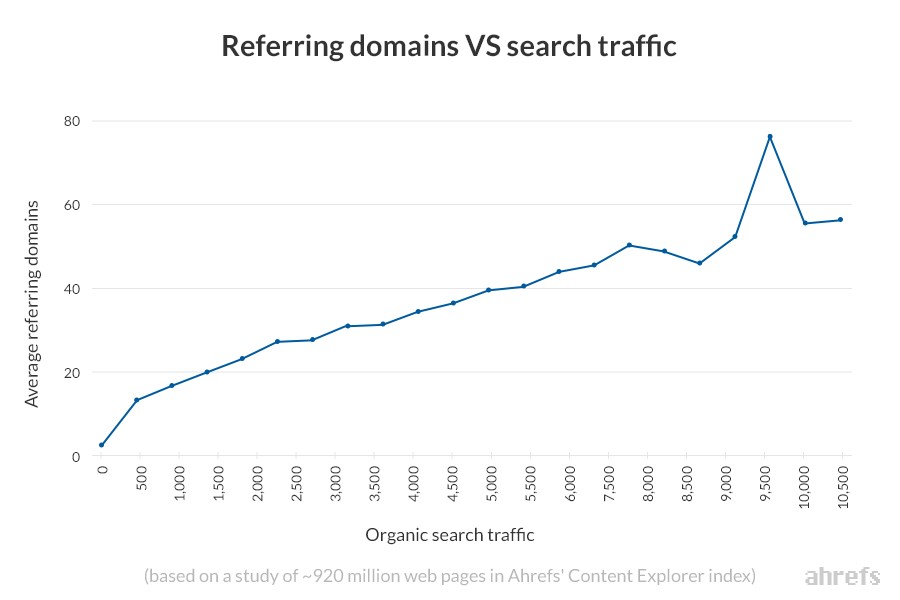
Backlinks are links from another site to yours. Google sees them as “votes” for your pages & content. Generally more backlinks is better but not all backlinks are equal. In fact having lots of links from irrelevant or spammy sites can hinder your SEO. Backlinks happen naturally over time but you can increase yours by reaching out to other sites with your content or writing for their blog.
This is a great visual from Ahrefs showing how the the number of backlinks from referring domains affects organic search traffic.
User experience
User experience includes things like load times, page content and how your pages are structured. If a user visits your site, stays there and engages with your content (scrolls, purchases or clicks something); Google will think it’s a good result and deliver it in the search results again! You can find out more here.
On-Page SEO
Text
First you can improve your page’s text by sparingly including keywords and increasing the wordcount – wordcount isn’t everything… don’t waffle, just make it useful!
Images & media
As Google progresses it delivers more media types for search results. Now, when you search “how to….” you’ll likely get videos first, there might be some images and then you’ll see the “normal” search results. Optimise your media by including descriptive “alt tags” with keywords.
Linking
More links between your pages and to other sites will improve SEO. If you mention one of your services or another article in your blog, link to it! It’s also great to link to external sites – when you’re blogging you may want to reinforce your point with a statistic, link the statistic to the site you found it on.
Meta Data
Ok, so technically metadata isn’t a ranking factor but you can increase the clicks you get by making your result more attractive. Keywords that a user searches show as bold in your search result so be sure to include them. Also include a call-to-action (learn more, find out more, check out… etc.) to encourage a click.
Regular updates of high-quality content
Regularly creating new high quality content is essential for increasing your ranking. Blogging regularly is a great way of delivering searchers exactly what they’re looking for. You can even update, repurpose or optimise existing content – Hubspot found that repurposing or optimising old pages doubled their conversion rate.*1
Technical SEO
By its very nature, this is quite technical! So I’ll briefly go through a couple of things you can do. Using mark-up like Schema can help search engines understand your page better and what it contains – you can mark-up your pages as “products” or “services” for example. Another thing you can do is create a sitemap (a map of your site that you can upload to search engines like with Google’s search console) and robot.txt files to instruct bots how to crawl your site.

How Long Does SEO Take?
Unlike paid-per-click advertising SEO is not instant and takes time.
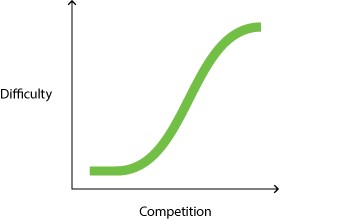
We would typically expect to start seeing SEO work in 4-6 months. After a few months as your SEO campaign gains traction you would likely see an exponential performance improvement. However, there isn’t a defined timeframe to determine how long SEO takes. This is because it would take longer to rank in a very aggressive industry for a highly competitive topic. This means that SEO is also dependent on your industry; the number of competitors and the number of people searching for your product or service.
Conclusion
61% of marketers consider improving their SEO and their appearance in organic results as their top inbound marketing priority and there is no wonder why.
If you want to bring in business through your website, SEO offers great long-term returns, no cost for every click and it’s completely trackable. You can measure your progress exactly and measure your return-on-investment.
Employing SEO services will help your business bring in new clients so speak to a specialist and get ready to start your SEO journey.
References: